Road Companion
Sabiha Gökçen across the Bosphorus to Europe
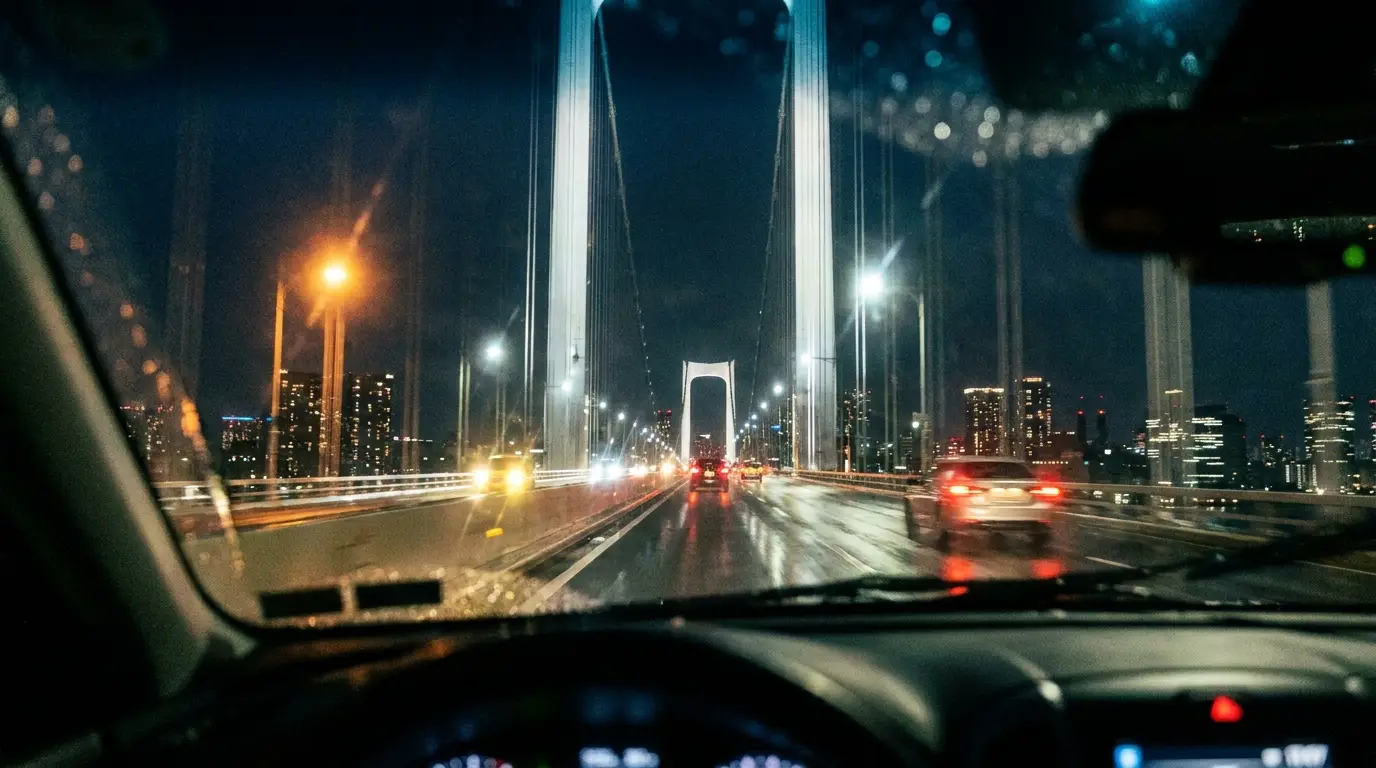
Halfway through this journey you change continents. The bridge crossing takes two minutes, but they are the two minutes that best explain why Istanbul has been fought over for so long.
- Journey time
- 70 min
- Narrations
- 4
What you will see on this journey
What you will see on this journey
01The spine of the Asian side
minute 12The D-100 you are travelling on is the main spine of the Asian side. The tall blocks on either side show how Istanbul grew eastwards after the 1980s: most of these neighbourhoods are younger than forty. The Sea of Marmara appears intermittently on your right. This side has no historic core like the European one; its story is not old but fast.
02Çamlıca hill
minute 34The hill rising on your left is Çamlıca, one of the highest points in Istanbul at two hundred and sixty-eight metres above sea level. The slender tower on top is a television mast, visible from everywhere in the city. In the nineteenth century this was where the court circle came to walk, and it appears often in Ottoman poetry. From here the road begins to drop, and within a few minutes the Bosphorus will come into view.
03The bridge crossing
minute 40You are now crossing from Asia into Europe. The water beneath you is the Bosphorus: thirty kilometres long, seven hundred metres wide at its narrowest, and the only route linking the Black Sea to the Marmara. More than forty thousand ships pass through each year; if you can see a tanker below, it is likely coming from a Russian or Ukrainian port. Looking north you can pick out the wooden waterfront mansions along the shore; dating from the nineteenth century, they are the most expensive property in the city today.
04The Dolmabahçe shore
minute 52Coming down off the bridge onto the shore road, a long white façade appears on your right: Dolmabahçe Palace. Completed in 1856, it is where the Ottoman sultans moved from Topkapı; the reason was simple, Topkapı had become too cramped for nineteenth-century state protocol. The palace clock tower and its sea gates are visible from the road. Mustafa Kemal Atatürk died here in 1938; the clocks in his room still read five past nine.
Read-aloud currently uses your phone's speech synthesis. Studio-recorded narration will be introduced at the production stage.
Three ideas for tomorrow
If what you saw on this route interested you, you can hire the same car and driver for a day. On an eight-hour hire the order of the city is yours to set.
Book your transfer
See your price now
See your price, enter your flight number and complete the booking. Your confirmation arrives with the driver's details.
- Confirmation time
- 15 dakika
- Service hours
- 7/24